

How Are Foster Children Matched with Families in Virginia?
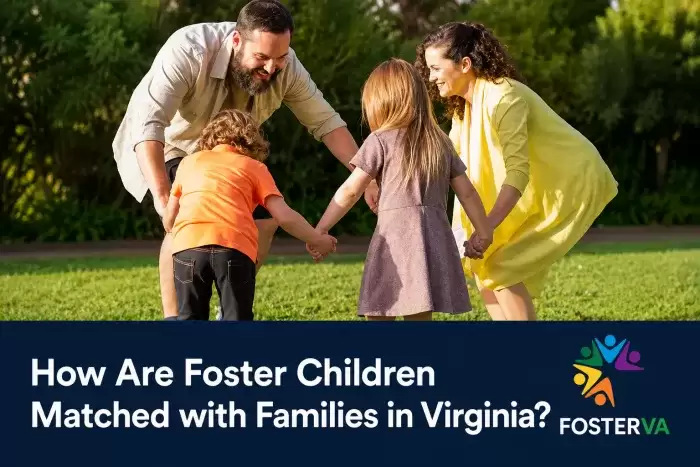
Foster children in Virginia are matched with families through a careful process focused on each child's best interests rather than simply filling an available foster home. Social workers evaluate the child's age, emotional and medical needs, school and community connections, sibling relationships, and cultural background before selecting a licensed foster family. They also review each family's home study, experience, availability, and ability to meet specific needs. Whenever possible, siblings are kept together, and reunification with parents or relatives remains the primary goal.
Updated: Aug 3, 2026
How are foster children in Virginia paired with families? The short answer is that every placement is done with the child’s best interests as the top priority. One will not find a system in which a child is placed in the first available home; social workers take a careful approach.
How Are Foster Children Matched with Families in Virginia?
The process is different for every child given that each child entering foster care has his or her own story. Some may arrive with emergency needs late in the evening; others arrive with siblings or have medical and educational requirements that must be addressed before any placement is finalized.
When it is time to find a foster home, the aim is not simply to place a child in an open bed but to locate the environment best suited to meet the child’s immediate and long-term needs. A carefully planned placement can greatly improve how quickly a child adjusts and lowers the odds of another move later on.
The Child’s Needs Always Come First
For the social worker, the first question for any decision is straightforward: what does this child need right now? The response varies from one child to the next. An infant might require a family with the right experience, while a teenager could benefit more from foster parents who are experienced in providing support. In some cases, the need is for someone who can manage trauma or stay on top of medical appointments.
In making placement decisions, a number of considerations are taken into account, including:
- Age and developmental disabilities
- Physical, emotional and behavioral needs
- School and community ties
- Cultural or religious background
- Any existing bonds with relatives
Trauma, for instance, is often helped most by routine and stability. Placing a child near friends or a familiar school can help ease the transition into foster care. Agencies see their role as creating a stable foundation for the child, not merely completing administrative boxes.
Your Home Study Is More Than a Formality
Prospective foster parents should be aware that the home study has a function that extends beyond licensing. During the process, your specialist will gather information on what you can offer as a foster care environment.
You will share things like:
- Your work schedule
- Your support network
- The number of children your home can accommodate
- Whether you are prepared for certain medical or behavioral issues
- Whether you are open to accepting sibling groups
- The ages you would prefer to foster
All of this is included in your file so that, when a placement is made, workers can identify which families are well suited to a given child. It is about matching the child’s needs with the family’s strengths rather than making an unsuitable match.
Why Sibling Groups Are Treated Differently
Virginia tries to keep brothers and sisters together whenever possible. For a child entering foster care, a sibling may be the only person they already know, and sharing a home provides comfort during an uncertain period. Placement workers will try to find a family with the space and resources to safely care for a group.
There are times, however, when it is not possible. A large group may outgrow the bedrooms in most homes, or a particular child’s needs may require something more specialized. If separation is necessary, agencies will still try to arrange phone calls and visits as long as it is in the children's best interests. Maintaining those family ties is an important part of the process.
It Is Not Just About Age
New foster parents sometimes think age is the primary consideration in a match. While it is a factor, it is not the only one. Two ten-year-olds can be very different; one may be involved in local sports with no health concerns, while another is in weekly therapy and recovering from trauma. Teenagers of the same age can have entirely different personalities and support requirements.
By considering more than the basic details to see how a child fits with a family’s routines and experience, placement workers tend to create more stable outcomes and avoid unnecessary disruption.
For the full scope of Virginia's placement standards, one can refer to the Virginia Administrative Code.
The Process of a Foster Placement
When a potential match is made, a placement worker will contact the foster family to discuss the details and see if it is the best fit for the child. During that discussion, the family is provided with as much information as available on the child's circumstances.
This could cover everything from:
- The child's age
- Medical or behavioral needs
- School placement
- Visitation with parents or relatives
- Whether there are siblings involved
Of course, how much information is available at the time varies; an emergency may yield only limited information, whereas in other instances social workers have a lot to share. The agency’s aim is to provide foster parents with enough information to make an informed decision.
Can a Foster Parent Say No?
Yes. It is not uncommon for those new to fostering to fear that declining a placement might affect their license or future opportunities. The truth is, they are encouraged to take on placements only when they are confident they can meet the child's needs.
A family licensed for younger kids may not be the right fit for a teenager, or an existing household dynamic may not allow room for another child. Honesty is best for everyone. A poor match is a source of stress and could mean the child has to be moved again.
Planned vs. Emergency Placements
There is no one way a placement happens. Some children require a safe home on short notice, and the worker must act quickly while keeping the child’s needs in mind. Other times, there is room to plan, review several homes, and speak with the families to determine where the child will be most stable. The goal is always to put the child in the safest, most suitable environment.
Reunification First
In Virginia, the system does not view foster care as a pathway to adoption above all else. If it can be done safely, the priority is to return the child to his or her parents or kin once the underlying problems have been resolved. For that reason, we look for foster families who will support the case plan.
They are the ones who will offer stability and support the child through therapy, school and medical appointments, as well as family visits. Those who understand the importance of that role are more prepared for the emotional transition.
When Things Don’t Work Out
Despite the best intentions, a placement may not work out as anticipated. As a child settles in, unanticipated needs can become clear, or the family may realize they cannot give the level of care required.
Social workers will then meet with the family to decide on the next steps. Sometimes extra support makes it work; other times the child is better served in a different home. While another move is never ideal, the decision is made with the child’s welfare in mind, not convenience.
How Are Foster Children Matched with Families in Virginia?
Good outcomes result from the work that happens before the child ever arrives. By matching a child to a family whose training and experience align with the child’s needs, you reduce stress and provide the child with a measure of certainty. So how are these matches made? It is a deliberate process.
We do not simply put a child in the first open home. Social workers consider every factor, from sibling ties to medical issues to the strengths of the foster family, to find the best possible pairing. It is about providing the child with the supportive environment he or she deserves and ensuring that the foster parents are confident in the care they provide.



Every child deserves a safe, supportive home. If you're ready to make a lasting difference, FosterVA can help you take the first step toward becoming a foster parent in Virginia.
What are you waiting for? Click here to help a child in need!