

Everything to Know About Foster-to-Adopt in Virginia
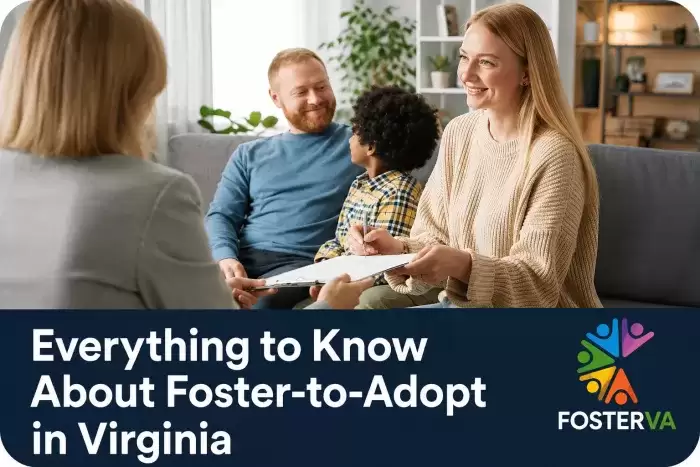
Learn how foster-to-adopt works in Virginia, including eligibility, licensing, home studies, placement, reunification, adoption, financial support, and how to get started.
Updated: Aug 30, 2026
For families considering foster care and adoption in Virginia, foster-to-adopt can provide a child with a safe, stable home while allowing a family to remain open to adoption if reunification is not possible. However, foster-to-adopt is not a guaranteed adoption. Foster care is temporary, and Virginia's goal is to reunite children with their families whenever it is safe and possible.
Learn About Foster-to-Adopt in Virginia
Foster-to-adopt in Virginia gives families the opportunity to provide a safe, supportive home while remaining open to adoption if reunification is not possible. Learn how the process works, what to expect, and how to get started with FosterVA.
Can I Foster and Adopt in Virginia?
Yes. You can foster and adopt in Virginia, but becoming a foster parent does not guarantee that you will adopt the child placed in your home. Virginia describes resource parents as caregivers who are dually licensed to foster and adopt. Resource parents provide temporary care and stability while a child's family works toward reunification.
If returning home is not safe or possible and adoption becomes the child's permanency goal, the foster family may be considered for adoption. Virginia's adoption program also allows adults aged 18 and older to apply to adopt, including single, married, divorced, and widowed applicants.
The most important thing to understand is that foster-to-adopt starts with foster care, not adoption. Families must be prepared to support a child's needs and permanency plan even when the eventual outcome is uncertain.
What Is Foster-to-Adopt in Virginia?
Foster-to-adopt means becoming a foster parent while being open to adopting a child if adoption later becomes the appropriate permanent plan.
Children enter foster care when they cannot safely live with their parents. Foster parents provide temporary care while children and families receive support intended to address the circumstances that led to foster care.
Virginia is a "kin-first" state, meaning relatives and close family friends are considered for placement whenever possible. Reunification remains the primary goal when it is safe to return a child home.
If reunification cannot occur safely, other permanency options may be considered, including adoption or transfer of custody to relatives. This makes foster-to-adopt different from simply choosing a child to adopt. Families must be prepared for reunification as well as the possibility of adoption.
Do I Have to Foster Before Adopting in Virginia?
No. You do not necessarily have to become a foster parent before adopting in Virginia.
Virginia DSS says most adoptions happen through foster care, and foster or resource parents often become adoptive parents when a child cannot return home. However, families can discuss the adoption path that fits their circumstances with their worker.
The distinction is important:
- Foster care is generally temporary and focused on safety, stability, and permanency.
- Adoption creates a permanent legal parent-child relationship.
- Foster-to-adopt combines those possibilities by allowing a family to foster while remaining open to adoption if it becomes legally and practically appropriate.
Who Can Become a Foster Parent in Virginia?
Prospective foster parents must meet Virginia's requirements and demonstrate that they can provide a safe, stable, and nurturing home.
FosterVA's current foster-parent information lists Virginia residency, financial stability, and adequate space in the home among its basic requirements. Adults living in the home must complete required background screenings, including criminal background checks, Child Protective Services checks, and driving record checks.
Virginia also makes clear that people do not have to be married or own a home to become resource parents. Resource parents can come from different family structures and backgrounds.
Families should expect an application, training, background checks, references, required documentation, and a home study before approval. For a deeper look at the process, see FosterVA's guide to becoming a foster parent in Virginia.
What Is the Foster Care Eligibility Process?
Foster care eligibility is determined through a process that assesses a family's readiness, home environment, background, and ability to meet a child's needs.
At FosterVA, prospective parents receive guidance throughout the process. The current process includes an initial inquiry, orientation, six foster care training sessions, an application, background checks, a home study, and a final assessment.
FosterVA's home-study process includes at least three two-hour home visits. From the beginning of training through the finalized assessment, the process typically takes approximately 90–120 days. FosterVA currently estimates that the process from the beginning of training through finalized assessment takes approximately 90–120 days. Individual circumstances can affect the timeline.
You can also learn more about what happens during a foster care home study and how to prepare for a foster care or adoption home study.
How Does Foster-to-Adopt Work After Licensing?
After licensing, placement decisions consider the child's needs and the family's approved capacity and readiness. Foster parents provide daily care and stability while working with social workers and other professionals involved in the child's case. They may also help children maintain appropriate relationships with their birth families.
At FosterVA, families are not required to accept a placement. Every placement requires the family's consent, and the team works with families to determine whether a placement is an appropriate fit.
A child's case can develop in different ways. Reunification may occur when it is safe, or another permanency option may be pursued. If adoption becomes the appropriate goal, the foster family may be considered an adoptive placement.
For more detail, see FosterVA's guide to how foster children are matched with families in Virginia.
How Should You Choose Among Virginia Foster Care Agencies?
When comparing Virginia foster care agencies, evaluate the support you receive before, during, and after placement, not just how quickly you can become licensed.
Ask each agency:
- Who will guide me through licensing?
- What training will I receive?
- Who can I contact when I need help?
- What support is available after placement?
- How does the agency prepare families for reunification?
- Can I decline a placement that is not a good fit?
- What happens if a placement becomes challenging?
- What support is available if adoption becomes the child's permanency goal?
Virginia licenses child-placing agencies that place children in foster homes, adoptive homes, or independent-living arrangements. FosterVA provides guidance throughout the foster-parent process, including a dedicated Foster Parent Advocate, training, and home study support.
The best agency for one family may not be the best fit for another. Look for realistic expectations, responsive communication, thorough preparation, and meaningful support after licensing.
What Financial Support Do Foster Parents Receive?
Foster parents receive financial support to help cover the costs of caring for a child, but foster care is not employment, and these payments are not a salary. FosterVA currently lists monthly support of approximately $580 for children ages 0–4, $677 for ages 5–12, and $861 for youth ages 13 and older. Additional support may apply depending on a child's needs.
Children in foster care are also covered by Medicaid for eligible healthcare, and foster parents receive access to training and caseworker support. There is also no cost to become a foster or adoptive parent through FosterVA, according to its current information for foster parents.
Families should view financial support as assistance with the child's expenses rather than income from fostering. For more detail, read FosterVA's guide to financial considerations for foster parents.
What Happens If Adoption Becomes Possible?
If a child cannot safely return home and adoption becomes the appropriate permanency plan, the foster family may be considered an adoptive placement. Virginia's adoption process includes requirements and a home study, training, matching and placement, a supervision period, and court finalization.
Adoption is a legal process. A foster parent does not independently decide when a child becomes available for adoption. Permanency decisions are made through the child's case-planning and legal process.
Virginia also offers Adoption Assistance for eligible children adopted from foster care. Depending on eligibility, assistance can include a one-time payment toward legal expenses, monthly maintenance payments, Medicaid, and specialized services. Eligibility must be determined before the adoption is finalized. Families interested in this stage can learn more about adoption from foster care.
Frequently Asked Questions About Foster-to-Adopt
Is foster-to-adopt guaranteed in Virginia?
No. A foster placement may end in reunification, another permanent placement, or adoption. Families should be prepared to support the child's permanency plan, whatever the outcome.
Can a single person become a foster parent?
Yes. Single adults can become resource parents if they meet the applicable requirements. Virginia's adoption program also allows single adults to apply to adopt.
Do I have to own a home to foster?
No. You do not have to own a home to become a resource parent. You must provide a safe and stable home that meets applicable requirements.
How long does it take to become a foster parent?
FosterVA currently estimates 90–120 days from the start of training through final assessment for most families. Individual timelines vary.
Can foster parents adopt their foster child?
Yes, a foster parent may be considered for adoption when reunification is no longer possible, and adoption becomes the child's permanency goal. Adoption is not automatic.
How much does it cost to foster or adopt from foster care?
Becoming a foster or adoptive parent through FosterVA is free. Some adoption expenses may also qualify for reimbursement or Adoption Assistance, depending on eligibility.
What adoption services are available?
Adoption services can include training, home studies, matching, placement, supervision, finalization, and post-adoption support. Eligible families may also receive Adoption Assistance.
Who provides child welfare services in Virginia?
Child welfare services are provided through the Virginia Department of Social Services, local departments of social services, and licensed agencies working with children and families. Licensed child-placing agencies can place children in foster homes, adoptive homes, or independent-living arrangements.
Take the Next Step With FosterVA
Choosing to foster or adopt is a significant decision. Understanding the process before you begin can help you determine whether it is right for your family.
If you are considering foster care and adoption in Virginia, FosterVA can help you understand the requirements, complete training, prepare for the home study, and learn what to expect from fostering. You do not need to have every answer before you start. Learn about the process, ask questions, and speak with FosterVA about the next step for your family.



Ready to Become a Foster Parent?
If you’re considering foster-to-adopt in Virginia, take the next step with FosterVA. Learn about the requirements, ask your questions, and find out how you can provide a safe, supportive home for a child.
What are you waiting for? Click here to help a child in need!